Amazon has officially accelerated the pace of retail logistics by announcing the nationwide rollout of its 30-minute delivery service, branded as Amazon Now. This strategic expansion marks a significant shift in the e-commerce landscape, moving beyond the standard next-day or same-day fulfillment models that defined the company’s growth for the past two decades. By leveraging a decentralized network of micro-fulfillment centers, the retail giant is now capable of delivering thousands of essential items—ranging from fresh groceries and household staples to consumer electronics—in half an hour or less.
The service, which began as a pilot program in Seattle and Philadelphia in late 2025, is now scaling rapidly. At launch, the service is available in major metropolitan hubs, including Atlanta, Dallas-Fort Worth, and Orlando, with aggressive expansion plans targeting millions of customers across the United States by the end of the calendar year.
A Chronology of Amazon’s Speed Evolution
The path to 30-minute delivery has been a multi-year technological undertaking. Amazon’s obsession with speed began with the inception of Prime in 2005, which originally focused on two-day shipping. Over the following fifteen years, the company systematically reduced that window to one-day and, eventually, same-day delivery for millions of products.
The shift toward "ultra-fast" delivery—defined as under two hours—began in earnest with the introduction of Prime Now years ago. However, the current iteration, Amazon Now, represents a technological leap forward in inventory management and predictive logistics.
- December 2025: Amazon initiates clandestine pilot tests of 30-minute delivery in Seattle and Philadelphia, gauging customer demand and operational efficiency.
- March 2026: The company expands its mid-tier delivery options, adding one-hour and three-hour fulfillment windows for over 90,000 products, signaling a move toward regionalized inventory.
- Present Day: The official launch of Amazon Now moves the service into dozens of U.S. cities, including Austin, Denver, Houston, Minneapolis, Oklahoma City, and Phoenix.
This progression reflects a deliberate transition from a centralized warehouse model, which relies on large, distant distribution centers, to a "neighborhood hub" model. By positioning inventory closer to high-density population centers, Amazon effectively bypasses the long-haul transit times that have historically been the bottleneck of e-commerce.
The Economics of Ultra-Fast Logistics
One of the primary challenges for any company attempting sub-one-hour delivery is the unit economics. Traditional courier services and competitors like DoorDash, Uber Eats, and Instacart often rely on a gig-economy model that includes service fees, variable delivery charges, and mandatory customer tipping.
Amazon’s approach to pricing is designed to disrupt this ecosystem. The fee structure for Amazon Now is notably transparent: Prime members pay a flat $3.99 fee per order, while non-members are charged $13.99. For orders totaling less than $15.00, a small order surcharge of $1.99 (for Prime members) or $3.99 (for non-members) is applied.
Industry analysts note that this model is highly competitive. Because Amazon controls its own logistics network rather than relying solely on third-party contractors, it can standardize pricing without the volatility of "surge" pricing or service markups often found on third-party food and grocery delivery apps. By bundling this service into the Prime ecosystem, Amazon is also increasing the "stickiness" of its membership program, making it increasingly difficult for consumers to justify canceling their subscriptions.
Operational Infrastructure and Micro-Fulfillment
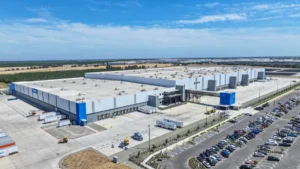
The technological backbone of Amazon Now lies in its micro-fulfillment centers. Unlike the massive regional fulfillment centers (RFCs) that span over a million square feet, these smaller, urban-centric facilities are optimized for high-velocity inventory.
These facilities house the most frequently purchased items—dairy, produce, OTC healthcare products, baby supplies, and tech accessories. Because the inventory is limited to "high-turn" goods, the space requirements are significantly smaller, allowing Amazon to utilize real estate in dense urban areas where traditional warehouses would be impractical.
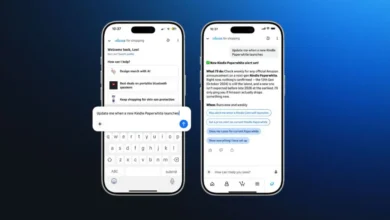
Furthermore, the integration of these facilities into the Amazon app is seamless. When a user logs in, the platform detects their location and dynamically updates the storefront to show only those items available for 30-minute delivery. These items are highlighted with a distinct "30-minute delivery" badge, guiding consumer behavior toward items that are already in stock at the nearest local hub.
Competitive Implications and Market Impact
The entry of Amazon into the 30-minute delivery space puts immense pressure on incumbent players in the grocery and convenience delivery sectors. Companies that have built their business models on third-party partnerships now face a competitor that owns the entire vertical—from the website interface and payment processing to the local warehouse and the final-mile delivery vehicle.
In 2025, Amazon demonstrated its sheer scale by delivering over 13 billion items via same-day or next-day shipping globally. The United States alone accounted for 8 billion of those deliveries, a 30% increase year-over-year. As Amazon continues to shift a portion of that volume toward 30-minute fulfillment, the competitive divide between traditional retailers and digital-first logistics providers will likely widen.
"Amazon Now is designed for the moments when convenience is the primary driver of the transaction," said Udit Madan, Senior Vice President of Amazon Worldwide Operations. "Whether it is a household essential needed immediately or an urgent gift, our network is now optimized to meet that need in under half an hour."
Future Outlook and Challenges
While the expansion is ambitious, it is not without challenges. Maintaining a 30-minute delivery window 24 hours a day requires significant staffing, vehicle maintenance, and complex routing algorithms. Environmental factors, traffic congestion, and the rising costs of urban labor could pose risks to the sustainability of the service’s current fee structure.
Furthermore, Amazon continues to experiment with alternative delivery methods to solve the "last mile" puzzle. The company’s Prime Air drone delivery program, which is currently in testing across eight U.S. locations, offers the potential for even faster fulfillment times, theoretically bringing the delivery window under 60 minutes for even more remote or suburban areas.
As the retail industry observes this rollout, the focus will remain on whether consumer demand for 30-minute delivery is a permanent shift in shopping behavior or a niche preference. If the pilot cities demonstrate sustained usage, it is highly probable that Amazon will accelerate the rollout to secondary and tertiary markets, effectively setting a new standard for what consumers expect from online retail.
For now, the message from Seattle is clear: the era of waiting days for a delivery is rapidly giving way to an era where the digital storefront acts as an extension of the local pantry. By shortening the distance between the warehouse and the doorstep, Amazon is not just delivering products; it is delivering a level of convenience that aims to make the physical trip to the store obsolete.